
KLOW – GHK-Cu (50mg) / KPV (10mg) / BPC-157 (10mg) / TB500 (10mg)
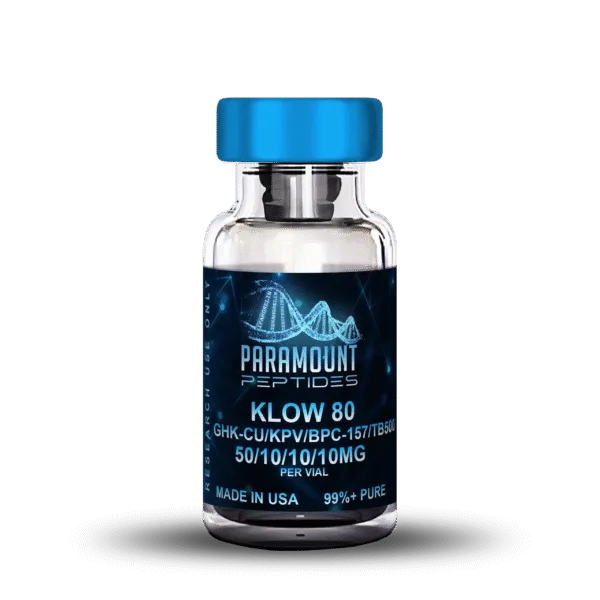
KLOW 80 – GHK-Cu (50mg) / KPV (10mg) / BPC-157 (10mg) / TB500 (10mg)
Price range: £165.00 through £172.00
High Quality – 99% Purity Guaranteed
Product Quality Guarantee
We are continuously conducting HPLC test on all of our raw powders as well as finished products to ensure the quality of our products. You can have the product you bought from us tested at any HPLC licensed testing facility and if the results are negative, we will refund the following:
HPLC TEST FEE
$100
PLUS Total amount of the Order + Shipping Fee
Description
KLOW 80 – GHK-Cu (50mg) / KPV (10mg) / BPC-157 (10mg) / TB500 (10mg) in the UK – Research Overview
KLOW 80 – GHK-Cu (50mg) / KPV (10mg) / BPC-157 (10mg) / TB500 (10mg) in the UK is a research-grade peptide blend designed for advanced laboratory and academic study. This compound is strictly not for human consumption and is intended for controlled experimental applications.
The peptide combination in KLOW 80 has generated significant interest across the UK, particularly in London, Manchester, Birmingham, Leeds, Glasgow, and South East England. Researchers explore its effects on tissue regeneration, cellular signalling, and peptide synergy in laboratory settings.
Furthermore, KLOW 80 attracts attention from universities, biotech laboratories, and scientific communities, making it a key search topic online for peptide research in the UK.
What Is KLOW 80 – Peptide Composition and Research Applications
KLOW 80 combines four peptides:
- GHK-Cu (50mg): Copper peptide involved in tissue repair and wound healing.
- KPV (10mg): Anti-inflammatory peptide targeting immune regulation pathways.
- BPC-157 (10mg): Peptide promoting cellular regeneration and gut integrity studies.
- TB500 (10mg): Peptide influencing cellular migration and tissue remodeling.
Researchers use this blend to study synergistic effects on cellular repair mechanisms, peptide receptor interactions, and tissue recovery models. Moreover, the combination of these peptides allows controlled laboratory simulations of complex biochemical processes.
Consequently, KLOW 80 serves as a multi-functional research peptide tool for advanced peptide and regenerative studies.
KLOW 80 Research Trends Across the UK
Research interest in KLOW 80 is concentrated in South East England, London, Manchester, Birmingham, and Leeds. Laboratories and universities in these regions focus on regenerative medicine, peptide signalling, and anti-inflammatory research.
Additionally, KLOW 80 studies contribute to academic publications, peer-reviewed journals, and laboratory experiments, driving UK researchers’ online searches and interest.
Moreover, the peptide blend has become a trending research topic due to its potential in regenerative biology, cellular repair mechanisms, and tissue recovery modelling.
Laboratory Applications of KLOW 80 in the UK
KLOW 80 – GHK-Cu / KPV / BPC-157 / TB500 supports multiple experimental applications:
- Modelling tissue regeneration and repair in vitro
- Studying immune system regulation and anti-inflammatory pathways
- Investigating cellular migration and wound healing mechanisms
- Exploring peptide synergy in laboratory research
Furthermore, KLOW 80 enables detailed analysis of molecular interactions, receptor binding studies, and cellular signalling pathways. This makes it a critical tool in academic research, experimental laboratories, and regenerative peptide studies.
Understanding GHK-Cu in KLOW 80
GHK-Cu is a naturally occurring tripeptide that binds copper ions and promotes tissue regeneration, wound healing, and collagen synthesis. Researchers study its cellular mechanisms to understand protein synthesis, tissue repair, and cellular communication in experimental models.
Additionally, GHK-Cu in KLOW 80 facilitates studies on anti-inflammatory signalling, gene expression modulation, and cellular regeneration pathways. Its inclusion enhances the research potential of the peptide blend for laboratory investigations.
Exploring KPV Peptide Research in the UK
KPV is a tripeptide derived from α-melanocyte-stimulating hormone (α-MSH) that modulates immune and anti-inflammatory pathways. Researchers use KPV to investigate immune response, cellular signalling, and tissue recovery in controlled laboratory studies.
Moreover, KPV complements GHK-Cu and BPC-157 in KLOW 80 by reducing inflammatory markers and providing a model for combined regenerative studies. Its inclusion enhances the peptide blend’s versatility in academic research.
BPC-157 Peptide Applications in the UK
BPC-157 is a 15-amino-acid peptide derived from gastric juice proteins. It promotes angiogenesis, cellular repair, and tissue regeneration in laboratory models. Researchers focus on its role in gut integrity, vascular development, and wound healing pathways.
Furthermore, BPC-157 works synergistically with TB500 and GHK-Cu in KLOW 80 to enhance experimental outcomes. This peptide is frequently referenced in peer-reviewed regenerative studies and UK laboratory research.
TB500 Peptide Research Significance
TB500, derived from thymosin beta-4, regulates cellular migration, tissue repair, and cytoskeletal organization. In KLOW 80, TB500 complements GHK-Cu, KPV, and BPC-157, enabling studies of tissue remodeling and cellular recovery in vitro.
Additionally, TB500’s role in cytoskeletal modulation provides researchers with a unique model to study peptide synergy and regenerative biology. Its inclusion in KLOW 80 broadens research applications in UK laboratories.
Safety and Regulatory Considerations for KLOW 80 in the UK
KLOW 80 is strictly for research purposes. It is not approved for human consumption, and proper laboratory protocols must be followed. Researchers must adhere to UK safety regulations, including:
- Using personal protective equipment (PPE)
- Controlled storage and handling procedures
- Documented experimental methodologies
Ensuring compliance guarantees ethical research and the validity of laboratory results.
Why KLOW 80 Is Popular Among UK Researchers
The combination of GHK-Cu, KPV, BPC-157, and TB500 in KLOW 80 allows for comprehensive peptide research. Scientists value its ability to model tissue repair, cellular signalling, and regenerative mechanisms in a controlled setting.
Moreover, KLOW 80’s inclusion in peer-reviewed studies, scientific journals, and online research databases highlights its significance in UK academic and laboratory research.
KLOW 80 vs Other Research Peptides
Unlike single peptides, KLOW 80 offers multi-functional research potential. Its combination of tissue-regenerative, anti-inflammatory, and cellular repair peptides allows researchers to:
- Simulate complex biochemical processes
- Study peptide synergy in vitro
- Model tissue repair pathways more effectively than individual peptides
Consequently, KLOW 80 is a valuable addition to experimental laboratories and academic research programs.
Academic and Laboratory Applications Across the UK
Universities and laboratories in London, Manchester, Birmingham, and Cambridge study KLOW 80 to analyze:
- Tissue regeneration mechanisms
- Immune system modulation
- Cellular migration and repair
- Peptide synergy in laboratory models
Additionally, KLOW 80 supports research publications, thesis studies, and peer-reviewed experimental data in the UK, reinforcing its relevance in scientific communities.
Frequently Asked Questions About KLOW 80 in the UK
- What are the components of KLOW 80 and their research uses?
- Is KLOW 80 safe for human consumption?
- How is KLOW 80 applied in laboratory experiments?
- What makes KLOW 80 different from other peptide blends?
Providing clear answers ensures researchers understand the intended applications and regulatory compliance.
Responsible Research Communication for KLOW 80
Accurate, research-focused communication is essential. All information about KLOW 80 should emphasize laboratory and academic use only, avoiding human consumption implications.
Furthermore, transparency ensures that online audiences, students, and researchers comprehend peptide applications safely.
Future Research Outlook for KLOW 80 in the UK
Future studies on KLOW 80 will explore peptide interactions, regenerative pathways, and cellular repair mechanisms in greater detail. Research in the UK aims to expand understanding of tissue regeneration, anti-inflammatory processes, and peptide synergy.
Until further studies are approved, KLOW 80 remains strictly research-grade, supporting laboratory exploration, academic studies, and experimental learning.
Conclusion – KLOW 80 in the UK as a Research Tool
KLOW 80 – GHK-Cu / KPV / BPC-157 / TB500 in the UK is a versatile, multi-functional peptide blend for laboratory and academic research. While it offers immense potential for regenerative biology, immune modulation, and tissue repair studies, it is not intended for human consumption.
Researchers should follow safety protocols, adhere to UK regulations, and treat KLOW 80 as a research-only peptide compound. Continued investigations promise to expand knowledge in peptide synergy, tissue regeneration, and cellular biology
Additional information
| Dose | 1 & more, 5 & more, 10 & more |
|---|
7 reviews for KLOW 80 – GHK-Cu (50mg) / KPV (10mg) / BPC-157 (10mg) / TB500 (10mg)
Related products
-
4X Blend GHRP-2 (5mg) / Tesamorelin (5mg) / MGF (500mcg) / Ipamorelin (2.5mg)
Price range: £65.00 through £86.00 Select options This product has multiple variants. The options may be chosen on the product page -
2X Blend Tesamorelin (10mg) / Ipamorelin (5mg)
Read more -
Ipamorelin (10mg)
Price range: £72.00 through £78.00 Select options This product has multiple variants. The options may be chosen on the product page -
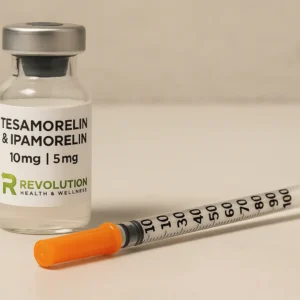
2X Blend Tesamorelin (10mg) / Ipamorelin (2mg)
Price range: £58.00 through £72.00 Select options This product has multiple variants. The options may be chosen on the product page
Antionette A Scriber –
Top notch team
Robert A Upton –
Highly appreciate your service
Jonathan S Parker –
Delivery was discreet and successful.
Billy L Crist –
Delivery was incredibly successful.
Scott A Castillo –
Top notch service.
James M Mann –
I was surprised of it all. I will shop again.
Michael M Wolf –
Delivery was prompt and easy.